Source foldable bamboo dish drying rack with utensil storage for kitchens
Compare 30 listings of the foldable bamboo dish drying rack with utensil storage featuring double tiers and lacquer finishes. Buyers can evaluate MOQs, certifications, and dimensions for home kitchen organization needs.
Key considerations
Products List






Comprehensive Sourcing Guide
Strategic Sourcing Guide for Foldable Bamboo Dish Drying Racks
The global demand for sustainable kitchen organization solutions has elevated the foldable bamboo dish drying rack with utensil storage to a staple category in B2B procurement. Buyers seeking this specific product must navigate a landscape defined by natural material variability, specific functional requirements, and rigorous compliance standards. This guide provides a disciplined approach to sourcing, grounded in verified product attributes and industry best practices, ensuring that procurement decisions are based on tangible evidence rather than marketing assertions.
Technical Specifications and Functional Architecture
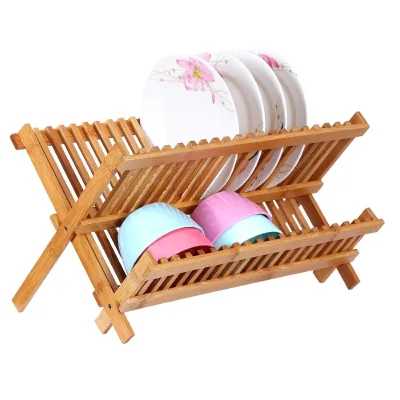
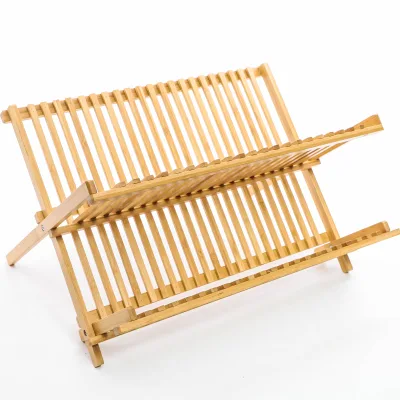
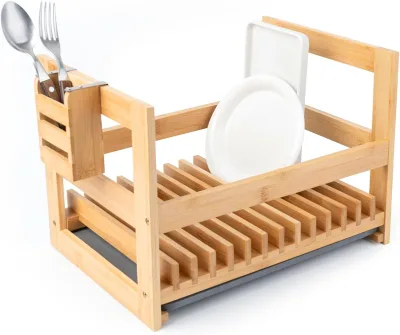
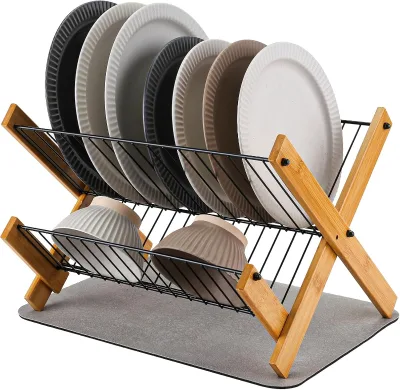
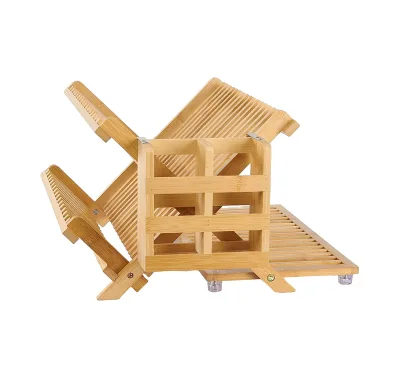
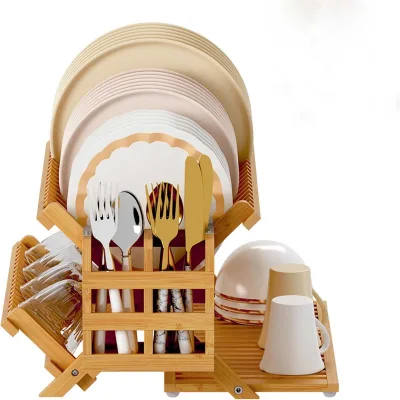
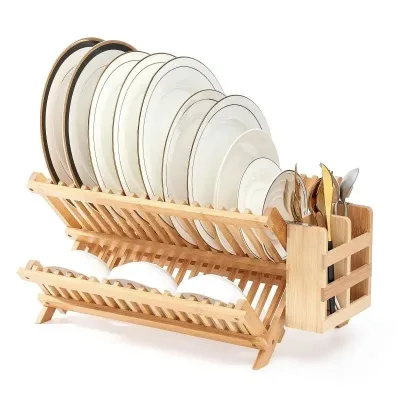
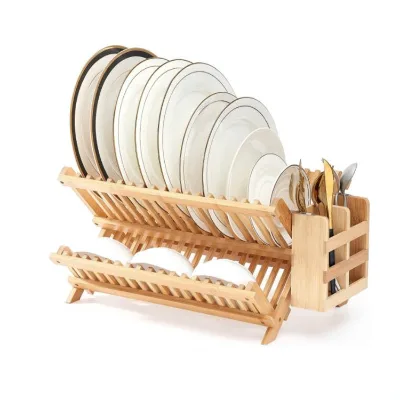
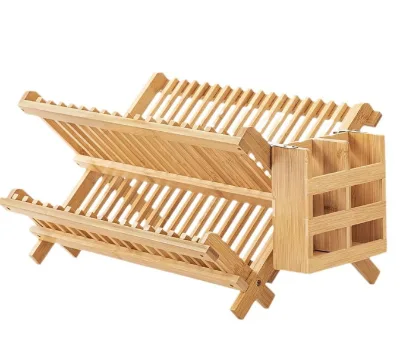
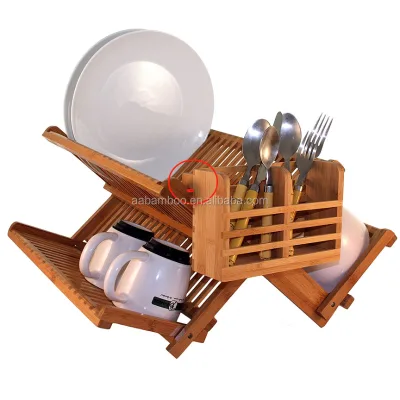
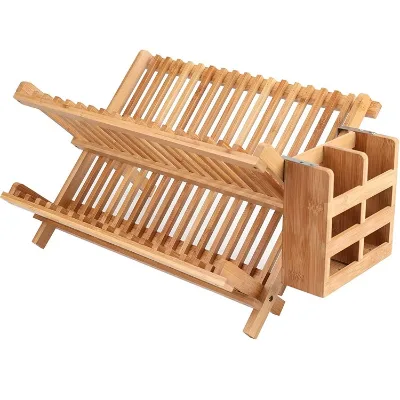
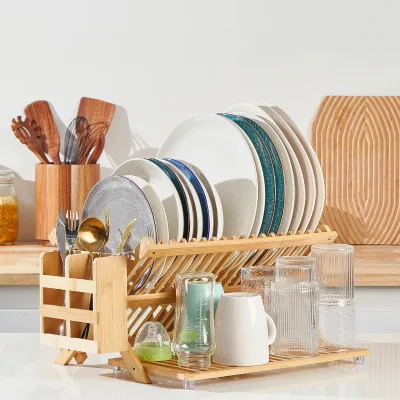
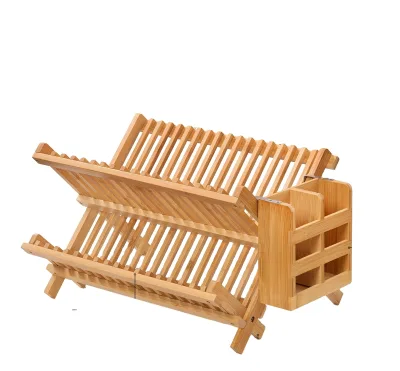
The core of the foldable bamboo dish drying rack lies in its structural integrity and dimensional precision. When evaluating potential suppliers, the primary observation is the material composition, which is consistently identified as Bamboo and Wood. This natural composition dictates the product's aesthetic and functional limits. The typical design features a double-tier configuration, maximizing vertical space while maintaining a compact footprint when folded. The dimensions are critical for logistics and retail shelving; observed specifications indicate an open size of approximately 45x30x26 cm, reducing significantly to 45x33x4 cm when closed. This high degree of foldability is a key functional design element, allowing for efficient storage in small kitchens or during shipping.
The manufacturing process plays a pivotal role in the product's longevity. The standard technics applied involve lacquer finishes or vegetable oil treatments. These finishes are not merely cosmetic; they serve as protective barriers against moisture, which is the primary enemy of bamboo. A product with a lacquer finish typically offers a harder surface, while vegetable oil treatments provide a more natural, food-safe feel that may require periodic reapplication. The dimensional tolerance for these units is observed to be within ±1mm, a standard that ensures the folding mechanism operates smoothly without excessive gaps or friction. Furthermore, the weight tolerance is generally maintained within ±10%, ensuring consistency in shipping costs and handling.
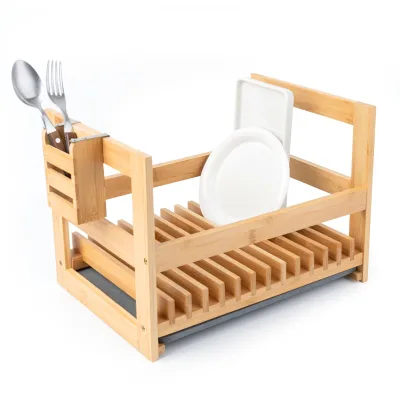
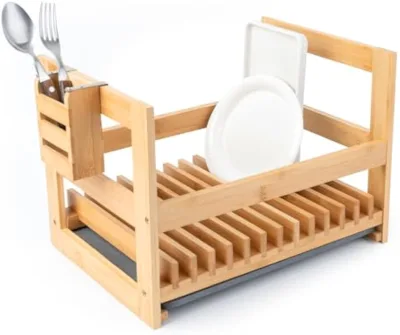
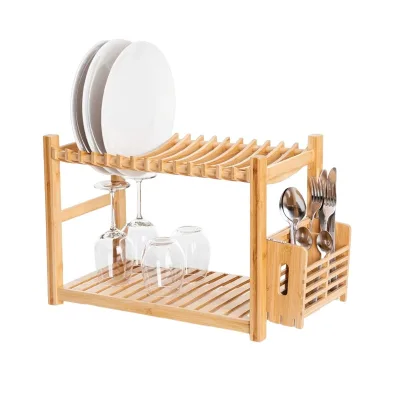
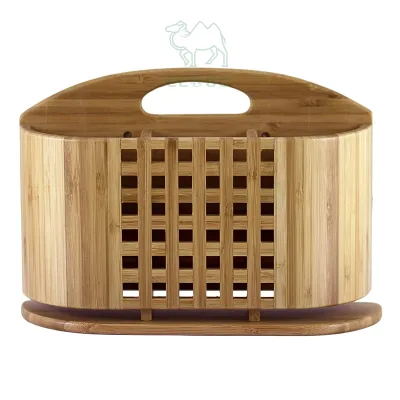
The product is designed as a standing type, requiring no wall mounting, which broadens its applicability to rental properties and temporary housing. The shape is predominantly rectangular, optimizing the use of counter space. The functional design extends beyond dish drying to include dedicated storage for utensils, chopsticks, spoons, and tableware, making it a multi-purpose kitchen organizer. The single gross weight of the unit is typically around 3.5 kg, a factor that influences packaging density and freight calculations.
Compliance, Certification, and Material Safety
In the B2B sector, compliance is not optional; it is a prerequisite for market access. For bamboo kitchenware, the most critical certifications involve food safety and chemical regulations. Verified product data indicates that compliant units often carry CE/EU and FDA certifications. These certifications are essential for selling in North American and European markets, as they verify that the materials and finishes do not leach harmful substances into food or beverages.
Buyers must verify that the "bamboo natural color" or "natural" finish does not rely on prohibited dyes or heavy metal-based pigments. The certification status should be validated through current documentation, as standards evolve. The product is explicitly non-disposable, which aligns with sustainability goals and reduces the environmental impact associated with single-use plastics. The eco-friendly feature is a direct result of the renewable nature of bamboo and the absence of synthetic resins in the core material, provided the finishing process adheres to the specified vegetable oil or lacquer standards.
When evaluating suppliers, request proof of these certifications for the specific model numbers, such as TCDR003 or TCRY032. Different models may have different finishing processes, and a certification for one model does not automatically cover another. The "other" capacity rating suggests that volume limits are not standardized across all listings, requiring buyers to test specific units for their intended load-bearing capacity. The place of origin, typically Fujian, China, is a major hub for bamboo processing, but it also necessitates strict quality control to ensure that the sourcing of raw bamboo does not involve deforestation practices that violate international trade agreements.
Cost Drivers and Pricing Dynamics
Understanding the cost structure of foldable bamboo racks is essential for accurate budgeting. The observed price range in the market spans from $1 to $26.3 USD, a wide variance that reflects differences in material grade, finish quality, and branding. Several factors drive these costs. First, the raw material cost fluctuates based on the age and density of the bamboo stalks. Second, the finishing process is a significant cost driver; a high-quality lacquer application requires more labor and time than a simple oil treatment.
The Minimum Order Quantity (MOQ) is another critical cost determinant. The data shows an MOQ range of 50 to 2000 units, with a high-confidence observation of 500 pieces for standard orders. Some suppliers offer negotiable MOQs upon stock availability, which can be advantageous for smaller buyers or those testing the market. The packaging method also impacts cost; while bulk carton packing is standard, customized gift packing increases the unit price due to additional materials and labor.
Logistics costs are heavily influenced by the single package size of 50x35x10 cm and the gross weight of 3.5 kg. These dimensions suggest a relatively efficient cube utilization, but the weight can add up quickly in ocean freight. Buyers should calculate the landed cost by factoring in the FOB price, shipping, insurance, and duties. The "other" standard designation implies that some suppliers may offer custom standards, which can lead to variable pricing structures. It is crucial to distinguish between the base product cost and the cost of customization, such as laser engraving logos, which adds a premium to the unit price.
Typical Applications and Market Segmentation
The foldable bamboo dish drying rack with utensil storage is versatile, serving multiple market segments. The primary applicable space is the home kitchen, where it functions as a drying rack for dishes, bowls, and cutlery. Its compact, foldable nature makes it ideal for apartments and small kitchens where counter space is at a premium. The standing type installation allows for immediate use without the need for drilling or permanent fixtures, appealing to renters and homeowners alike.
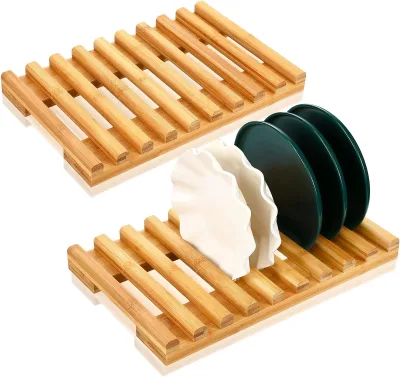
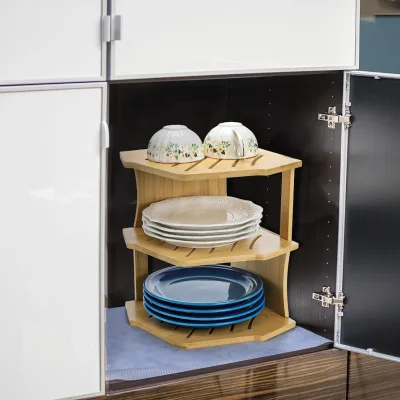
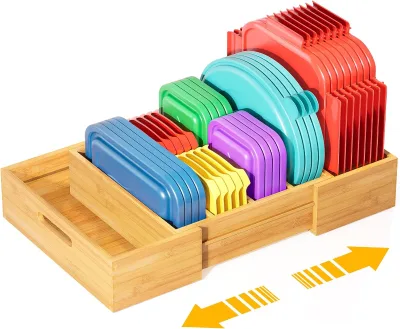
Beyond residential use, these racks are suitable for commercial hospitality settings, such as boutique hotels, bed and breakfasts, and short-term rental properties. The eco-friendly branding resonates with modern travelers who prioritize sustainability. The product's ability to hold spice containers and various tableware types expands its utility beyond simple dish drying. The "Storage Trays" classification indicates that some variations may be designed for countertop organization rather than just drying, catering to buyers looking for general kitchen storage solutions.
The customization options, including laser engraving and custom designs, allow these products to be branded for corporate gifts or promotional campaigns. The sample time of 5-7 days is a key metric for buyers needing to evaluate product quality before committing to large orders. This short lead time for samples facilitates rapid decision-making in the procurement cycle.
Supplier Evaluation and Quality Control
Selecting the right supplier requires a rigorous evaluation process. Buyers should prioritize suppliers who can demonstrate consistency in their dimensional tolerances and weight specifications. The observed tolerance of ±1mm for dimensions and ±10% for weight are benchmarks that must be met consistently across production batches. Any deviation suggests a lack of quality control in the manufacturing process.
When assessing suppliers, verify their capacity to handle the specific model numbers and finishes. For instance, a supplier offering the TCDR003 model with a lacquer finish must have the specific equipment and expertise to apply that finish uniformly. The brand name "ZC" or "HC" may appear in listings, but buyers should focus on the factory's capabilities rather than the brand name alone. The ability to provide customized packaging and logos is a sign of a mature supplier capable of meeting diverse client needs.
Quality control should be implemented at multiple stages. Incoming raw material inspection ensures the bamboo is free from pests and structural defects. In-process checks should monitor the drying and lacquering processes to prevent warping or peeling. Final inspection must verify the folding mechanism's smoothness and the overall aesthetic finish. Buyers should request third-party inspection reports to validate these claims, especially for large orders. The "Stocked" feature mentioned in some listings indicates that some suppliers maintain inventory, which can reduce lead times but may limit customization options.
Long-Term Procurement Considerations
Sourcing foldable bamboo racks is not just a one-time transaction; it requires a long-term strategy. The "Non-Disposable" nature of the product means that durability is paramount. Buyers should assess the supplier's track record for product longevity and after-sales support. The "Customization: Available" attribute suggests that buyers can work with suppliers to refine designs over time, adapting to market trends or specific customer feedback.
Supply chain resilience is another critical factor. Given that the place of origin is Fujian, China, buyers should consider geopolitical risks and logistics disruptions. Diversifying suppliers or maintaining a safety stock can mitigate these risks. The "Negotiable Upon Our Stocks" MOQ option provides flexibility for buyers to adjust order volumes based on demand fluctuations.
Finally, sustainability must remain a core consideration. As environmental regulations tighten, suppliers who can prove ethical sourcing of bamboo and use of non-toxic finishes will gain a competitive advantage. Buyers should align their procurement strategies with these values to ensure long-term market relevance. By focusing on verified specifications, robust certifications, and reliable supplier partnerships, buyers can secure a steady supply of high-quality foldable bamboo dish drying racks that meet the demands of the modern kitchen.
FAQs
What certifications do foldable bamboo dish drying racks with utensil storage have?
Compliant units typically carry CE/EU and FDA certifications to ensure food safety. These verify that materials and finishes do not leach harmful substances. Buyers must request proof of these certifications for specific model numbers like TCDR003 to validate compliance before purchasing.
How does the foldable design of bamboo dish drying racks with utensil storage work?
The design features a double-tier configuration that folds from 45x30x26 cm open to 45x33x4 cm closed. This high degree of foldability allows for efficient storage in small kitchens or during shipping. The dimensional tolerance is maintained within ±1mm to ensure the mechanism operates smoothly.
Which finish types are available for foldable bamboo dish drying racks with utensil storage?
Standard finishes include lacquer or vegetable oil treatments applied via specific technics. Lacquer offers a harder protective surface against moisture, while vegetable oil provides a natural, food-safe feel. The choice affects longevity and maintenance requirements for the bamboo material.
Can buyers customize the logo on foldable bamboo dish drying racks with utensil storage?
Yes, customization is available with laser engraving or acceptable customized designs. Suppliers can apply logos upon request, though this may affect the unit price. Buyers should confirm customization options and lead times, as sample times typically range from 5 to 7 days.
What is the minimum order quantity for foldable bamboo dish drying racks with utensil storage?
The standard minimum order quantity is 500 pieces, though it can be negotiable upon stock availability. Some listings show an MOQ range of 50 to 2000 units depending on the supplier. Buyers should verify specific MOQ requirements for their desired model and customization needs.
How heavy is a single unit of foldable bamboo dish drying racks with utensil storage?
The single gross weight is typically around 3.5 kg per unit. Weight tolerance is generally maintained within ±10% to ensure consistency in shipping costs. This weight factor significantly influences packaging density and freight calculations for international buyers.
Where are foldable bamboo dish drying racks with utensil storage manufactured?
The place of origin is typically Fujian, China, a major hub for bamboo processing. The port of shipment is often Fuzhou. Buyers should consider this location for logistics planning and verify that sourcing practices comply with international trade agreements regarding deforestation.